Instagram marketing for a small business works when you post a steady mix of five kinds of content (behind the scenes, customer stories, useful tips, interactive Stories and clear offers) and every post gives people an easy next step: book, call, message or buy. How often matters less than keeping a schedule you can sustain. The goal isn't followers; it's enquiries and bookings from the people who already follow you, and their friends.
This guide covers what to post, how to turn followers into customers, how often to post, what to measure, and when it makes sense to pay for ads or get help. It draws on how we run social media management for small businesses, including a clinic we grew from 1,000 to 6,000 followers in six months.
What Instagram can (and can't) do for a small business
Instagram is good at three things for a local or small business:
- Keeping you in front of people who already know you. Past customers, people who walked by, people who were referred. A steady feed reminds them you exist when they need you.
- Building trust before the first visit. People check your profile before they book. Real photos of your work, your team and your customers answer "are they any good?" faster than a website can.
- Starting conversations. A DM is often the first step to a booking, especially for services people have questions about.
What it doesn't do well on its own is reach large numbers of new people quickly. Organic reach (posts seen without paying) depends on how people react to each post, and it's hard to predict. That's why we treat organic Instagram as the trust-builder and paid ads (see below) as the reach-builder. More followers is not the goal on its own. A smaller account that turns followers into enquiries is worth more than a big one that doesn't.
5 types of content that bring customers
1. Behind the scenes
Show how your work gets done: the team setting up, a product being made, a before-the-doors-open routine. It makes your business feel human and shows the care that goes into the work.
Tip: use Stories for this. They disappear after 24 hours unless you add them to a highlight (Instagram Help), so they don't need to be polished.
2. Customer content and testimonials
Photos and videos your customers post of your product or service (user-generated content, or UGC) are the strongest proof you have. Ask customers to tag you, give them a short branded hashtag to use, and repost the best ones with credit. Short written or video testimonials work the same way.
If you run a health or aesthetics clinic, check your regulatory college's advertising rules before you post testimonials or before-and-after photos. For clinics, we summarize how we handle this in our compliance notes for med spas. This is general information, not legal or regulatory advice.
3. Educational posts and carousels
Answer the questions customers ask you every week: how a service works, how long it lasts, how to choose, what to do before and after. Carousel posts (several slides people swipe through) are a good format for breaking a topic into short tips. Educational content shows you know what you're doing, and it gets saved and shared, which helps it reach more people.
4. Interactive Stories
Polls, quizzes and question stickers get people to respond, which tells you what they care about. Use a poll to choose between two new products or time slots, or open a question box and answer the best questions in your next Stories. Each response is a small signal that someone's interested, and some turn into DMs.
5. Offers and booking prompts
This replaces the "motivational quotes" many small business accounts post. Quotes get likes; offers get bookings. Post a clear reason to act now: a new service, open spots this week, a seasonal package, an event. Say exactly what to do: "Tap the link in our bio to book" or "DM us 'SPOTS' for this week's openings".
Local creators (optional)
A local creator with a few thousand engaged followers in your area can be worth more than a big account elsewhere. Pick someone whose audience matches your customers, agree in writing what they'll post, and make sure the post is clearly marked as a paid partnership.
Turning followers into customers
Most small business accounts lose customers at the same point: someone is interested and there's no easy next step. Fix these four places:
- Your bio. Say what you do and where in one line, then put the action in the link: your booking page, shop or a short page of links. Make sure the page works well on a phone.
- Your posts and Stories. End each one with a single call to action. In Stories, add a link sticker that takes people straight to the booking or product page. Meta notes that link stickers are for organic Stories; Stories ads link in their own way (Meta Business Help Center).
- Your DMs. Reply quickly, every time. A DM is a hot lead. Save quick replies for common questions (prices, availability, location) and always end with the next step: a booking link or a time to call.
- Your offers. Give followers a reason to act now, and something specific to say ("mention this post") so you can tell which posts bring customers.
How often to post, and what we actually schedule
Post on a schedule you can keep for months. A business that posts consistently every week does better than one that posts every day for two weeks and then goes quiet for a month. Stories can be more frequent and less polished than feed posts.
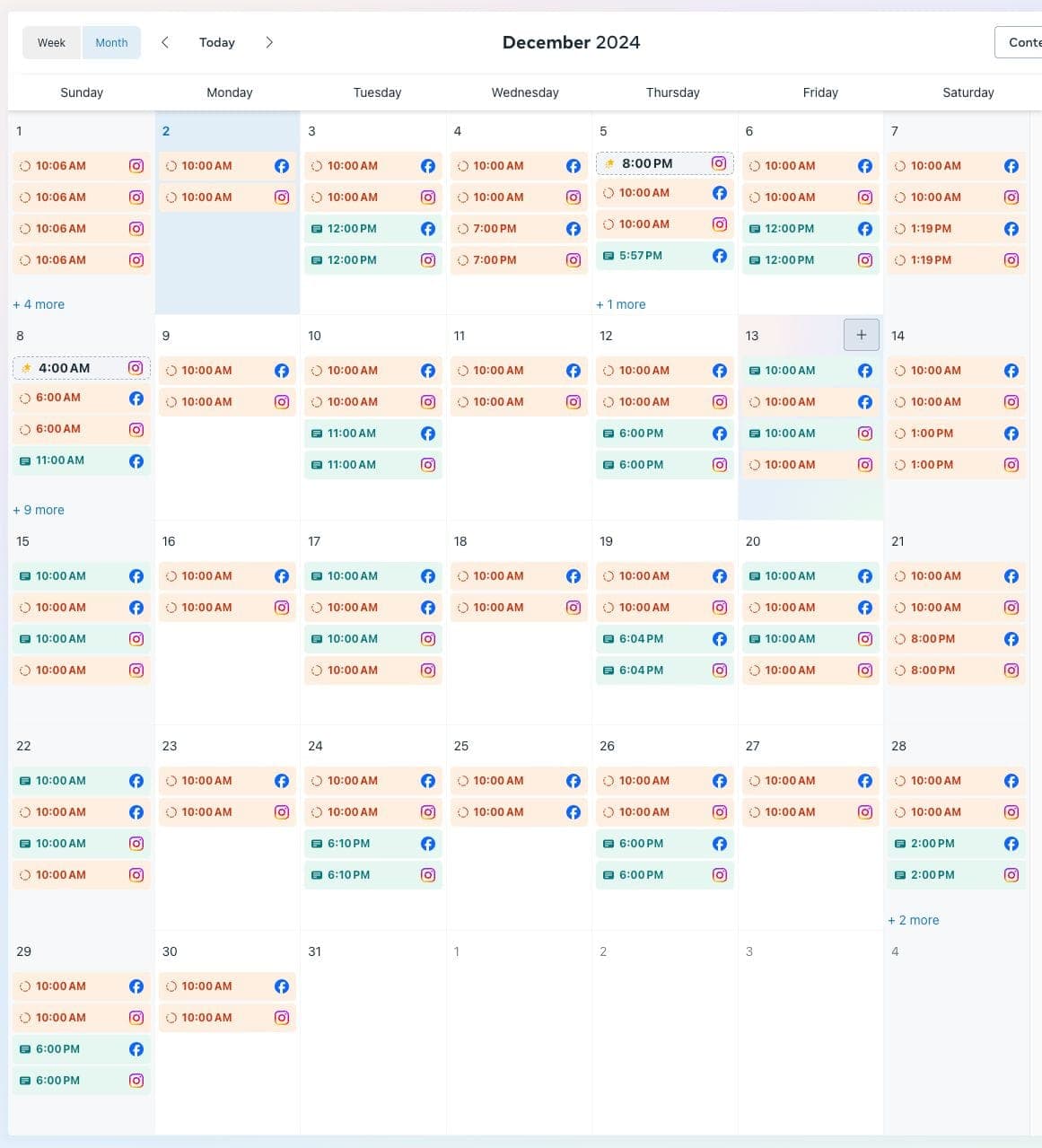
Here's how we plan and schedule content for our clients: three to four posts a week, mixing Reels, carousels and Stories, planned in a monthly calendar the client approves.
In short, every month we plan what goes out and when, write the captions and plan the Reels and Stories, and the client approves the calendar before anything is published. At the end of the month we look at what worked and lean the next calendar into it.
What to measure
Follower count is the easiest number to watch and the least useful on its own. With a professional (business or creator) account, Instagram gives you insights on your followers and how your content performs (Instagram Help), including insights on your Stories (Instagram Help). Track these each month:
| Measure | What it tells you |
|---|---|
| Profile visits | How many people were interested enough to look you up |
| Link taps (bio link and Story link stickers) | How many people took a step towards booking or buying |
| DMs and enquiries | How many real conversations Instagram started |
| Bookings or sales from Instagram | The number that pays for the work. Ask new customers how they found you, or use a code or phrase from the post |
| Reach and engagement per post | Which content types to make more of |
If profile visits are rising but link taps aren't, fix your bio and link. If link taps are rising but bookings aren't, fix the page they land on.
Example: how Elba Clinic grew from 1,000 to 6,000 followers in 6 months
Elba Clinic came to us with about 1,000 Instagram followers and limited reach. The growth below is all organic: we created the clinic's Instagram content and didn't run any paid ads.
We built a monthly content plan around two of the content types above, educational posts and behind-the-scenes content, with Stories, Reels, polls and Q&As in between. We reviewed performance every month and shifted the mix towards what was working. In six months the account grew from 1,000 to 6,000 followers (+500%).
Read the full story: how Elba Clinic grew on Instagram.
When to put money behind your best posts
Organic posts are a cheap way to test ideas. When a post or Reel does clearly better than usual, people have already told you they respond to it, and that's the content most worth paying to show to more people.
There are two ways to do it:
- Boosting a post from the Instagram or Facebook app. It's quick, but boosted posts have fewer customization and detailed targeting options than ads built in Meta Ads Manager (Meta Business Help Center). It's fine for a small test.
- Running it as a proper Meta ad in Ads Manager, where you can choose the goal (for example, leads or bookings rather than likes), target your area, retarget people who visited your profile or website, and track what each ad brings in.
If you want to reach new customers on purpose rather than hope a post spreads, it's time to turn your best posts into ads. For how paid social works for local businesses more generally, see our guide to social media advertising for local businesses.
When to hire help
Doing Instagram well takes a few hours every week: planning, taking photos and videos, writing captions, answering DMs and checking what worked. It's worth getting help when:
- You keep going quiet for weeks because the business comes first.
- You post regularly, but it isn't bringing enquiries and you don't know why.
- DMs sit unanswered for hours or days.
- You want to add paid ads and need the content and the ads planned together.
Our social media management service plans, writes, schedules and reports on your Instagram and Facebook every month, priced monthly based on the platforms and how much content you need. If you also want ads and a website, our All-in-One Growth Package covers ads, website and content in one package.
FAQ
How often should a small business post on Instagram?
As often as you can keep up for months. A steady weekly rhythm of feed posts, with Stories in between, beats bursts of daily posting followed by silence. Start with what you can sustain and add more once it's routine.
Are Reels worth it?
For most small businesses, yes, as part of the mix. Short videos showing your work, your team or a quick tip are often the posts most likely to reach people who don't follow you yet. They don't need to be polished; clear and useful is enough.
Should I buy followers?
No. Bought followers don't book, buy or recommend you, and they make your real numbers (reach and engagement per follower) look worse. Grow slower with people who might become customers.
How long before Instagram brings customers?
It depends on your starting audience, your offer and how consistently you post. Expect it to take months, not weeks, for organic content alone. Clear calls to action and fast DM replies shorten the gap; paid ads shorten it further.
Organic or paid first?
Start with organic so your profile looks active and trustworthy when people find it. Once you know which posts people respond to, put ad budget behind those. Most of our clients who use both find that each makes the other work better.
Next step
Want Instagram to bring you enquiries, not just likes? Get a social media management quote and we'll look at your account and send a content plan and price. Prefer ads, website and content together? See the All-in-One Growth Package.